Choose the paper by the hardest job it needs to do.
Most food papers look perfectly reliable when they are lying flat on a desk. The differences appear when the food arrives.
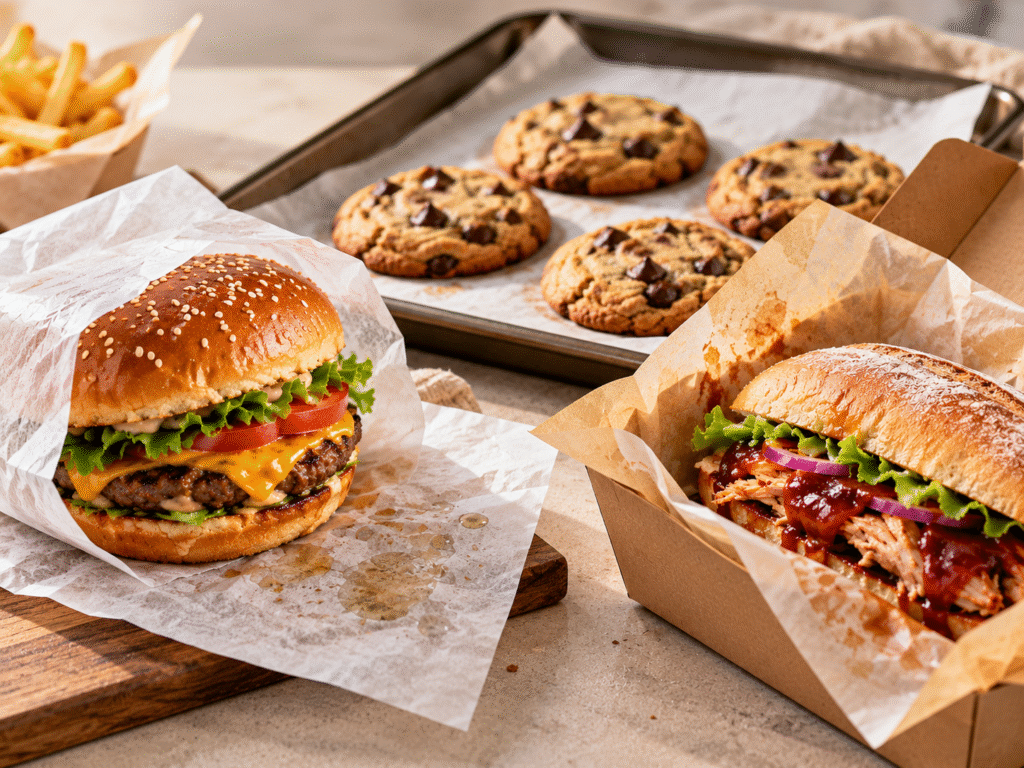
A hot burger sends oil into the wrapper. Cookie dough brings oven heat and sticking. Sauce and condensation add water to the problem.
These are different jobs, even when the paper looks almost the same.
The basic choice is simpler than it first appears:
Mostly oil: start with plain greaseproof paper.
Oven heat and clean release: start with baking paper.
Sauce, liquid or condensation: look at barrier-coated paper.
The paper name gives you a direction. The food tells you whether that direction is right.
When the Main Problem Is Oil
Plain greaseproof paper is a good starting point when the food is oily but not especially wet.
It is commonly used for burgers, fries, doughnuts, pastries and basket liners. Its main job is to slow down oil before it reaches the box, tray or hands holding the food.
The grease resistance usually comes from the structure of the paper itself. The fibres are worked and packed closely together, leaving less space for oil to move through.
For many foods, that is enough.
A croissant may leave butter on the wrapper, but it does not normally release much water. Fries and doughnuts also need oil control more than liquid protection. Plain greaseproof paper can keep the packaging tidy without adding a heavier barrier.
The important limit is moisture.
Greaseproof paper may resist oil and still become soft around tomato, dressing or a wet filling. It is also not automatically non-stick or suitable for oven use.
A plain cheeseburger and a heavily sauced burger may therefore need different wrappers. They are both greasy, but only one brings a large amount of moisture with it.
When Heat and Sticking Matter
Baking paper is designed for food that must come away cleanly after being heated.
Cookies, bread and pastries can all stick to an ordinary paper surface. Butter, sugar and dough make the problem worse as the temperature rises.
Many baking papers use a food-safe silicone treatment on one or both sides. This creates a release surface, helping baked food lift away without tearing. It can also reduce the need to grease trays and make cleaning easier.
This is the main difference between grease resistance and release.
A sheet can stop butter from soaking through and still allow a cookie to stick to it. Baking paper is chosen when the paper must handle both the heat and the food surface.
That extra performance may not be needed after baking.
A bakery may use baking paper under cookies in the oven, then use plain greaseproof paper to line the box. The first paper helps during production. The second handles oil and presentation after the cookies are ready.
Heat limits still vary from one baking paper to another. Some grades are made for a single bake, while others may be used more than once under suitable conditions. The actual temperature rating is more useful than the product name alone.
When Moisture Joins the Problem
Barrier-coated paper is useful when food brings water, sauce or condensation to the wrapper.
Consider a burger prepared for delivery. Oil comes from the meat and cheese. Moisture comes from the sauce, vegetables and steam trapped inside the box. Plain greaseproof paper may slow the oil but still soften around the wet ingredients.
A barrier coating gives the paper a more continuous surface. This helps it hold back moisture and liquid that could pass through an ordinary greaseproof sheet.
Barrier-coated paper is not one single material. The coating may be wax, polyethylene or a water-based barrier. Each option behaves differently around heat, cold food, moisture and sealing.
This means the word “coated” is only the beginning of the description.
There is also a practical trade-off. A stronger moisture barrier may keep sauce inside the wrapper, but it can also keep steam inside. Fried food may lose its crisp surface if it remains wrapped for too long.
The right choice depends on the food. A wet sandwich needs more moisture protection than a croissant. Fresh fries may need enough grease resistance while still allowing some steam to escape.
Why the Paper Names Overlap
The names become confusing because they describe different things.
Greaseproof describes what the paper does with oil. Baking paper describes where it is used. Coated paper describes how extra surface performance has been added.
One sheet may fit more than one description.
For example, baking paper can start with a greaseproof base and then receive a silicone release treatment. A barrier-coated food wrap may also be sold as greaseproof because oil resistance is one of its main benefits.
Terms such as “parchment paper” and “baking paper” can also mean slightly different things in different markets.
There is no need to solve every naming difference before choosing a paper. Use the name to narrow the options, then check what the actual grade is designed to do.
Four Questions That Make the Choice Easier
Before looking at paper colour, weight or printing, answer four practical questions.
Will the paper go into an oven?
If yes, use a paper with a suitable temperature rating and release performance. Do not assume that every greaseproof sheet is baking paper.
Is the food oily or is it also wet?
Oil points toward greaseproof paper. Sauce, juice and condensation may require a stronger moisture barrier.
How long will the food stay in contact with the paper?
A burger eaten at the counter and a burger travelling for forty minutes do not place the same demand on a wrapper.
Does steam need to escape?
A very closed barrier may help with liquid but may also soften fried or crispy food during a long hold.
These questions usually tell you more than the paper name alone.
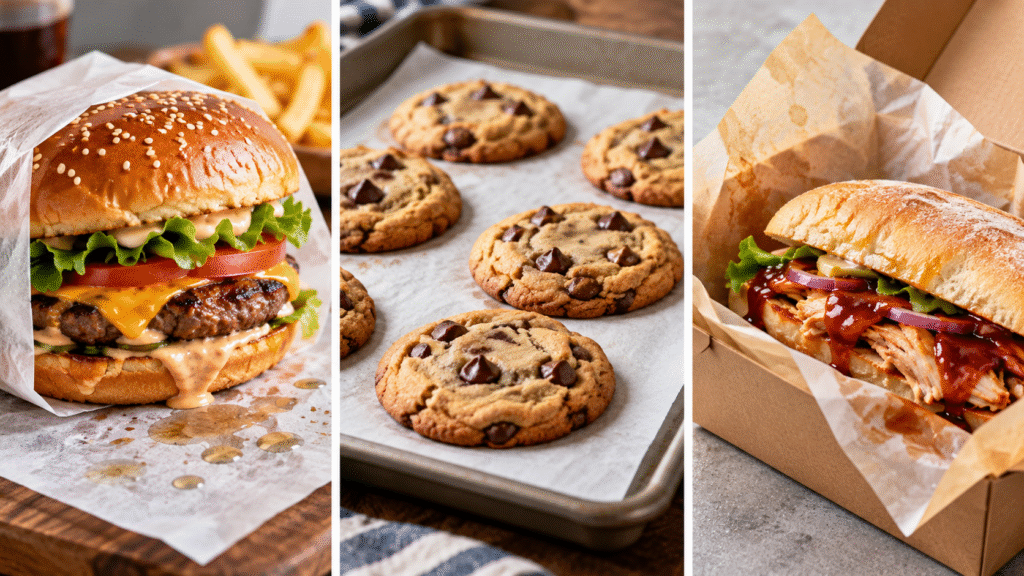
For a lightly sauced burger served immediately, plain greaseproof paper may be enough. For cookies baked directly on a tray, baking paper is the clearer choice. For a sauce-heavy sandwich prepared for delivery, a suitable barrier-coated grade may perform better.
Paper weight, colour and printing matter later. First, get the basic job right. A good-looking wrapper still fails if it becomes wet, sticks to the food or cannot handle the heat.